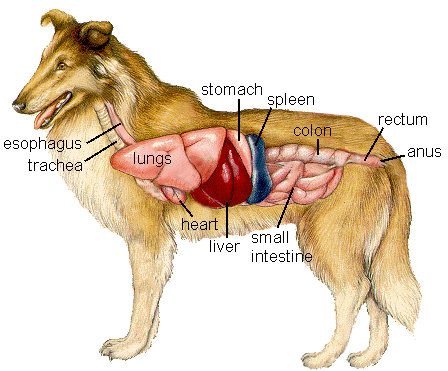
Digestive System
The Dog Digestive System is composed of all the necessary organs so that a complete digestion can take done, beginning in the moment when the food is ingested and chewed until the moment that they are processed and turned into energy, which are later expelled as residue. Beginning at the mouth and ending at the anus.The food must reach the stomach as a skittle, with the help of chewing, the tongue and saliva; it is then passed through the esophagus to the stomach, where the food is digested, and the fluid mass will then pass to the small intestine.Finally the wastes pass to the large intestine where they are turned into feces, which then pass through the rectum to the anal opening.
From: http://www.seefido.com/html/the_digestive_system.htm

Skeletal System
The skeletal frame of the
dog consists of 319 bones. If a dog's tail is docked or absent at
birth, there obviously are fewer bones in the skeleton. The muscles and
tendons of a dog are similar to those of a human; however, a dog's
upper body muscles bear half the weight of the entire body and are
better developed than a human's. The weight distribution between the
front and the rear of the dog are relatively equal.
Female Reproductive System
 |
Male Reproductive System
 |
In the male, the important structures of the reproductive system are the testicles, ductus or vas deferens, prostate gland, and penis. Sperm production and storage occurs within the testicles. Upon ejaculation, the sperm is transported to the prostate gland by the vas deferens. Within the prostate, additional fluids are added to the sperm to nourish it and aid in its transport from the penis and through the uterus.
The sperm and prostatic fluids, at the level of the prostate gland, enter the common urethra and are carried from the body through the penis. The penis of the dog has two specialized structures. The glans penis is a bulb-like dilation at the base of the penis, which fills with blood and holds the penis within the vagina during intercourse. Within the penis is a bone that maintains the shape and direction of this organ during mating. The penis is protected from the environment, as it is enclosed within the sheath or prepuce.
The more common disorders of the reproductive tracts of puppies include vaginitis in females, and cryptorchidism and phimosis in males.
